
The history of Chiang Mai Trekking

Table of Contents
The Difference Between Trekking and Hiking
Before diving into Chiang Mai trekking, it’s essential to understand the clear distinction between trekking and hiking. Trekking refers to a long, challenging, and often tiring multi-day journey on foot through remote areas, typically in hilly or mountainous terrain where transport is unavailable. Treks usually follow uncharted or rugged trails and span several days with overnight stays in basic conditions.
Hiking, by contrast, is a shorter outdoor activity focused on walking in scenic natural environments along established trails. While hikes can last a full day (or occasionally longer), they are generally less demanding and more accessible. These definitions align with common descriptions found across travel resources. In this article, we explore the evolution of Chiang Mai trekking, from its rugged backpacker origins in the 1970s–1990s to the comfortable, ethical, and sustainable experiences available today.

Chiang Mai Trekking in the 1990s: A Backpacker Classic
When I first visited Chiang Mai as a backpacker in the late 1980s, trekking was one of the few activities for tourists on offer. Every guesthouse offered multi-day non-touristic “hill tribe tours”. Tourism in Northern Thailand was still in its early stages. There were no cooking courses, zip lines, elephant sanctuaries, cycling tours, etc. yet.
In 1990, I experienced my first trekking tour as a tour leader for a group from an adventure company from the Netherlands. The four-day itinerary began with a drive to Thaton, followed by a scenic boat ride along the Kok River to Ban Ruammit. From there, we continued by elephant to a Red Lahu village. The second night was spent in a Yao (Mien) village perched on a mountaintop, where we enjoyed views of Chiang Rai’s lights after dark. We then hiked down to an Akha village for the final night before returning to Chiang Mai via Mae Suay and Mae Khachan — with a memorable coffee and cake stop at the famous Charin Garden Resort.

Early Trekking: Elephant Riding and Bamboo Rafting
Chiang Mai trekking in the early days looked very different from modern tours. Trekkings of three or four days were no exception. Villages were remote and had limited facilities. There were no toilets and we had to boil our drinking water. Guests often carried their own luggage, though porters were available from the first village. With groups of around 20 people, our total party (including guides and porters) could reach 35.
Elephant riding was optional but extremely popular; most travelers saw it as a once-in-a-lifetime experience, and guides earned extra income from it. Bamboo rafting was also a standard highlight on most treks. After a typical three- or four-week Thailand tour, guests consistently ranked the trekking portion as the absolute highlight of their tour.


The History of Chiang Mai Trekking
The exact origins of organized tourist trekking in Chiang Mai remain unclear. In the 1960s, only a handful of operators, such as Sri Nakornping Tours and Tommie’s Tour Agency, were offering tours. but they did not offer trekking as we know it today.
In 1972, American tourist Nick DeWolf explored Hmong and Karen villages independently on a rented motorbike rather than joining a guided trek. The 1975 publication of Southeast Asia on a Shoestring by Tony and Maureen Wheeler (the famous “Yellow Bible”) sparked a surge in independent backpacking across the region and helped popularize hill tribe visits.

Don Oppedijk goes trekking in 1977
In the later 1970s, guesthouses in Chiang Mai offered trekking. Dutch Photographer Don Oppedijk made his first trip to Chiang Mai in 1977. With his fellow backpackers, he stayed in the Je T’aime Guesthouse on Huay Kaew Road. The guesthouse had an in-house trekking company called Orbit Tribal Trekking.
Don and his friends embarked on a trekking to remote villages. On those pictures of the early days of trekking, we didn’t see elephant riding and bamboo rafting. Most likely, these activities started to be included in trekking trips in the late 80s and 90s.
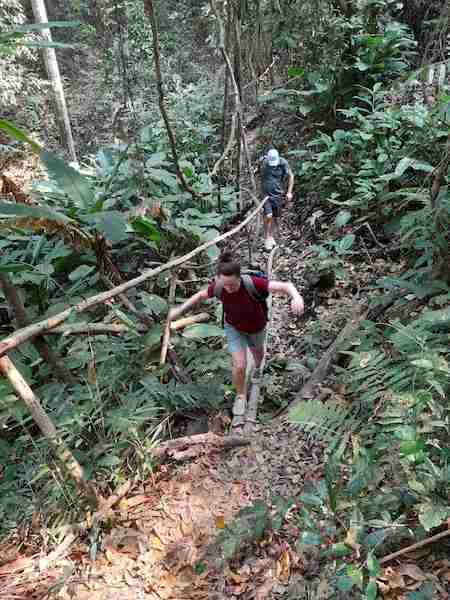
The infrastructure that catered to backpackers grew quickly. Entrepreneurial locals tapped into the market by opening guesthouses and restaurants for the growing number of young travelers. Guesthouses in Chiang Mai started offering trekking trips into the mountains to their guests. The typical trekking in those days were often three or four days and included hiking in the jungle and overnights in villages of exotic minorities aka hill tribes such as the Hmong, Lisu, Karen, Lahu and Yao. Most of these groups cultivated, traded and used opium. On most treks smoking opium was offered to trekkers at one stage. It was part of the adventure. Most treks included a trip on a bamboo raft.


What has changed in over 30 years of Chiang Mai Trekking?
In 1988, village conditions were very basic: no sanitary facilities, no electricity, and no clean drinking water (we boiled river water and carried canteens). Guests carried their own sleeping bags, dirt roads became impassable in the rainy season, and elephant riding was completely uncontroversial.
Today, the experience is far more comfortable while retaining its authentic charm. The authenticity is in the people:
- Every village has toilets (often including Western-style seating).
- Bottled water, soft drinks, and beer are widely available.
- Luggage is now transferred between villages by motorbike on improved roads.
- Most villages have electricity and a mix of traditional bamboo/wooden houses alongside modern brick-and-tile homes.
- Pickup trucks are common, and vehicle access reaches nearly every community.
Villagers often wear everyday Western-style clothing, though we oftern arrange respectful photo opportunities with local people in traditional dress.


Chiang Mai Trekking in 2026: Ethical and Sustainable Adventures
The explosive growth of global tourism and greater awareness through the internet led to important changes. Elephant riding faced widespread criticism over animal welfare concerns in tourism, including shows and captivity conditions. Green Trails stopped offering elephant rides in 2012 and has maintained an ethical, no-riding policy ever since.
Bamboo rafting remains a popular and now more sustainable activity. Traditional bamboo rafts are reused multiple times rather than discarded after a single use. The best experiences are available on the Mae Taeng, Mae Wang, and Mae Taman rivers.
In particular, the Mae Taeng River in Huai Nam Dang National Park offers the most legendary bamboo rafting finale. Green Trails includes this scenic raft trip to Sob Kai on the final day of our:
- 2-day Huai Nam Dang trek
- 3-day trekking and rafting tour
- 4-day jungle and river exploration
These private, small-group tours combine authentic jungle trekking, mountain scenery, hill tribe village stays, and the relaxing bamboo raft descent — delivering the spirit of classic Northern Thailand adventures with modern comfort and responsibility.
