

Jul
Table of Contents
Introduction to the Akha Living Legacy Project
Recreate and Reclaim Intangible Ancestral Heritage of the Akha people
In July 2023, the Cultural Crossroads Foundation’s Living Legacy Project launched the Akha Oral Tradition School, located in the Akha village of Ban Saen Suk, nestled in the mountains north of Chiang Rai.
Currently, twenty-two Akha students, aged twelve to fifteen, attend classes conducted in their native language. Here, they learn about their traditional heritage from master Akha musicians and artisans. This unique four-year initiative was conceived by American researcher, writer, and filmmaker Victoria Vorreiter. She is the founder of the Cultural Crossroads Foundation. It represents a vital effort to preserve the Akha people’s cultural identity in an increasingly modernized world.

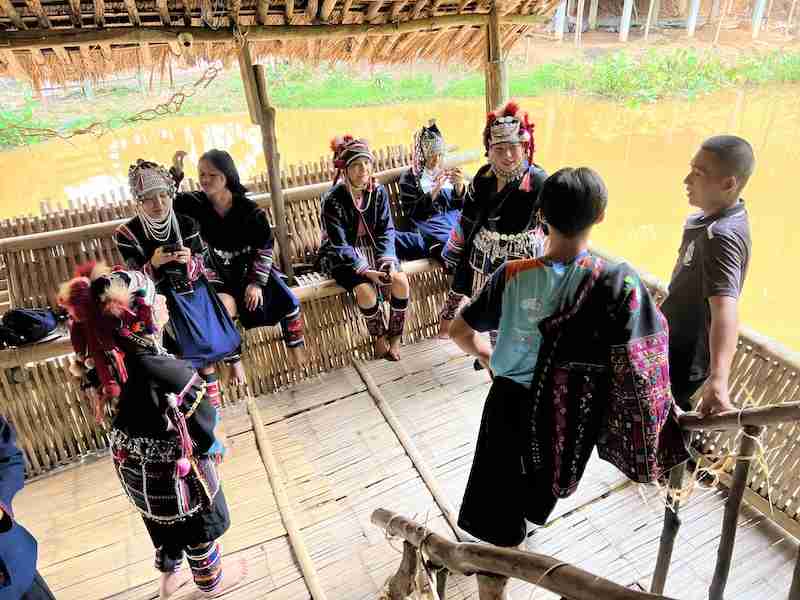
The oral tradition of the Akha people
The Akha people possess a rich oral tradition, comprising storytelling, songs, and ritual texts. For generations, this knowledge has been passed down verbally from elders to youth. Since the Akha language has no written script, the oral tradition plays a crucial role in preserving the community’s history, cultural values, and social structures.
However, in today’s rapidly changing world, this Intangible Heritage faces the threat of vanishing. The Akha Oral Tradition School offers hope. By teaching this precious legacy to the young people of Ban Saen Suk, the project aims to ensure that the oral tradition continues to live on.


The Akha Heritage Center in Ban Saen Suk
In parallel with the school, students from the village have contributed to the creation of the Akha Heritage Center. They collected artifacts, utensils, traditional dress, and other cultural items to form the basis of this small but meaningful exhibition. Temporarily housed in a traditional house, the center features informative texts that provide context for each display.
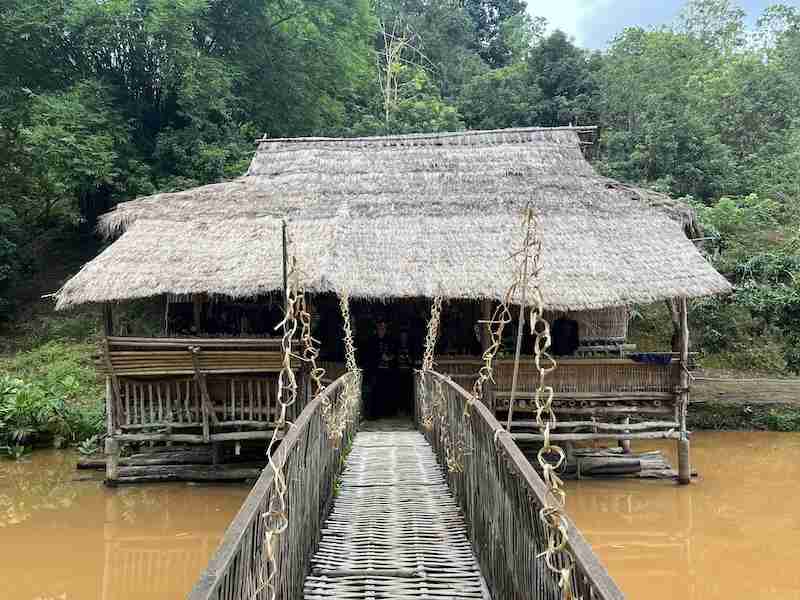
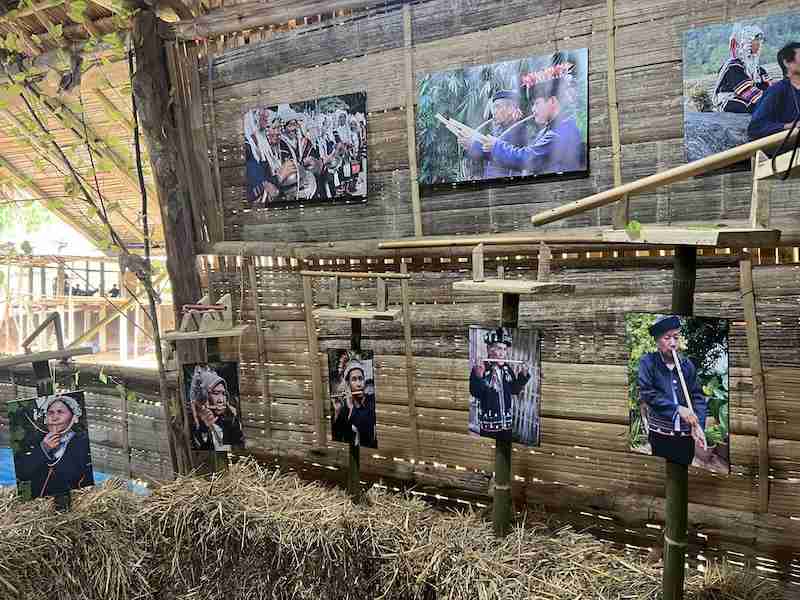
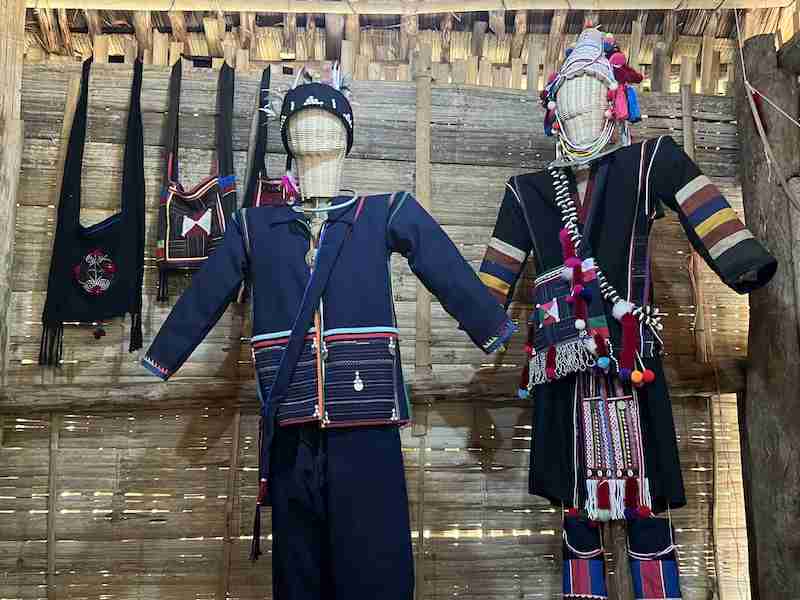
The opening of the Akha Heritage Center on Sunday June 29
The official opening of the Akha Heritage Center took place on Sunday, June 29 2025. We were honored to attend the event and witness firsthand this unique and inspiring cultural initiative.
The Cultural Crossroads Asia YouTube channel
Cultural Crossroads Asia has a fantastic YouTube Channel. Please watch these unique Akha Living Legacy Project videos of Akha people playing instrument or showing age-old skills. Please like and subscribe. Spread the word and help us keep this initiative alive and sustainable.
The channel features six short videos about Akha culture, created by Akha youth aged 12 to 16. Most of them had never used a mobile phone before. The videos came from a Digital Storytelling Course led by Clare Lyons, a former BBC World News producer and experienced trainer.
Over five days, the students learned how to use mobile phones to take photos and videos, tell stories with pictures, and do interviews. It was their first step into a new world of technology and opportunity. Below we showcase some of the amazing videos of the Cultural Crossroads Asia YouTube Channel.
Akha Living Legacy Project – Akha Textiles
Akha students Atuga, Bupo, and Abeu, who attend the Akha Oral Tradition School in Ban Saen Suk focused their promising film skills on ‘Akha Textiles,’ their video documenting the unparalleled artistry of Akha women, who adorn every garment of their family, from head to toe. Using an array of bright, bold colors, Bulae Chemeu uses embroidery and appliqué techniques to create a linear matrix of geometric motifs set on deep indigo hemp that uniquely identifies every Akha. Bulae’s interview and sewing demonstration were beautifully accompanied by Miju Manpo, a skilled Pawmee Akha vocalist, who recounted in song the exquisite articles of clothing worn by a young courting Akha girl.
Jabo, an Akha bird caller
Akha hunters use a yaja, a buffalo horn, to announce a successful hunt. But you can hear other instruments in the forest too. Hunters who use slingshots, crossbows, or old-style guns often carry a jabo, a bird caller. They use it to attract emerald doves, which are common in the area.
The jabo is made from a small bamboo pipe attached with beeswax to a wooden or bamboo chamber. It makes a soft sound that copies the dove’s gentle cooing.
In this video, Athu Pochear, a musician from the Ulo Akha, plays the jabo and explains what it’s used for. Then Asaw Jotaw shows how the jabo is made.
The Hulupoe, the small bamboo whistle Akha flute
The Akha have long-held traditions about who can play certain musical instruments, and when and where they can be played. One example is the hulupoe, a small whistle flute mostly played by Akha women. It’s made from a short piece of bamboo with one end closed by a natural knot and the other end open and rounded. The hulupoe doesn’t have any holes for fingers.
Women play it by blowing into it and singing at the same time. They often use it while walking along mountain paths — to send signals to people far away in the fields or forest, to scare off wild animals, or to catch the attention of someone they like.
In this video, Master Akha musician Abiya Pochear plays the hulupoe and shares memories of learning it from her sisters as a child. After that, Athu Pochear shows how to make this simple but powerful instrument.
Where is the Akha Living Legacy Project?
Ban Saen Suk is located near the scenic road that connects Mae Chan with Doi Mae Salong in Chiang Rai province. Together with Victoria and village representatives, we are working to increase awareness of the Akha Living Legacy Project and encourage responsible cultural tourism. Visitors are warmly welcomed to experience the resilience, wisdom, and beauty of the Akha heritage. Below is the location of Ban Saen Suk.
Share this:
