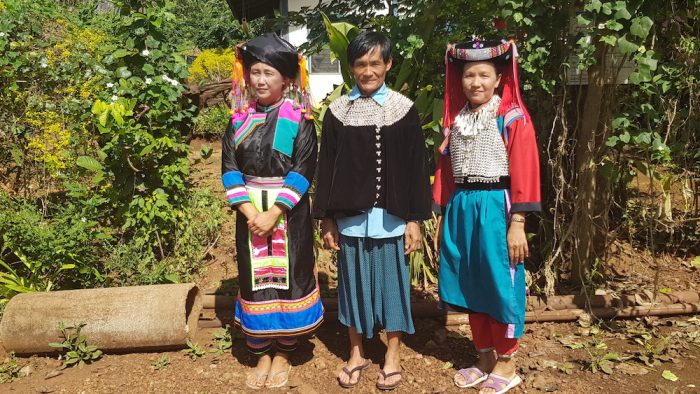
The Palong village of Mae Chon


Frans Betgem
Table of Contents
Mae Chon, a village of the Palong people
Mae Chon is a small village of the Dara-ang people in the Chiang Dao district, about 70km north of the city of Chiang Mai. About 60 families live in this village, that borders the Sri Lanna National Park, just east of the district capital of Chiang Dao. In Thailand most people know them as “Palong” but they call themselves “Dara-ang”. Mae Chon is one of four villages in the Chiang Dao district. The other villages are Pang Daeng Nai, Pang Daeng Nok and Huay Pong. In the village of Huay Pong, they live together with the Lahu people.
Mae Chon is about 15 minutes drive from Chiang Dao. The road is fairly good, apart from a short stretch, which is unpaved and sometimes difficult to pass in the rainy season. For unclear reasons, the community is still not connected to the electricity grid, unlike all other villages in this area. Within five kilometers there are Karen, Lahu, Lisu and Akha villages.

The history of Mae Chon
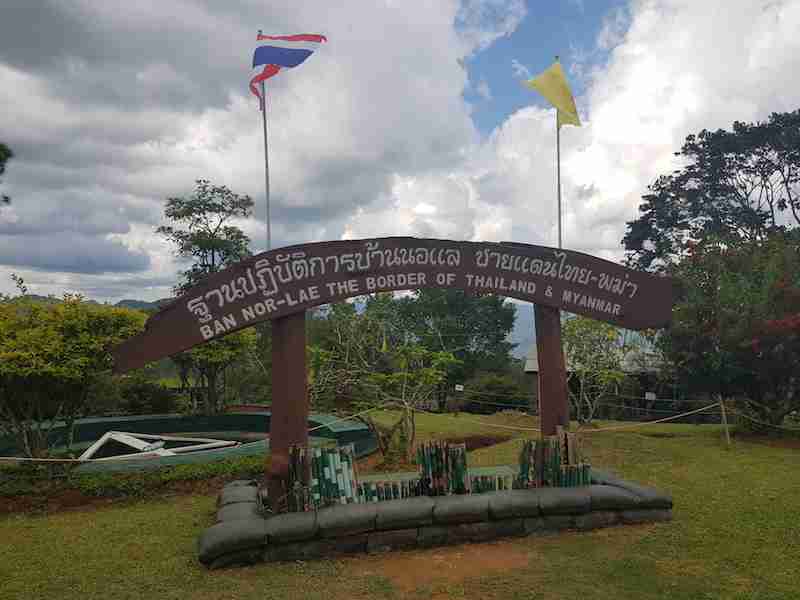
Some of the adult people who live in Mae Chon were born in Shan State in Myanmar, and entered Thailand in the 1980s at Doi Angkhang or at Tachileik. Why did they move to Thailand? According to the Palong people, their homeland in Shan State had become too dangerous to live, so they decided to escape to Thailand. Initially, they lived in the border community of Nor Lae but, after King Bhumibol, granted them permission to stay in Thailand, they moved to Chiang Dao district. There they started felling some trees to establish their new home in the forests east of Chiang Dao. Since 1989 there has been a logging ban in Thailand so local authorities accused them of breaking the law. Some of the men were convicted and jailed for several years. It is an unfortunate past villagers rather don’t talk about nowadays.

Tourism in Mae Chon
During the 1990s, the area east of Chiang Dao became a popular destination for young, adventurous tourists who went on multiple day trekking tours with overnights in the villages. Besides the Palong villages, there are communities of other indigenous groups such as the Karen, the Lisu, the Lahu and the Akha people making it very attractive for hilltribe trekking.
These villages are not too far from each other. A network of forest trails in this diverse area offers great flexibility for trekking. In those days, most trekking itineraries included elephant riding and bamboo rafting. It was just a question of time before a local entrepreneur moved into this area and started offering elephant rides and bamboo rafting on the Ping River.
Local companies started promoting two-, three- and four-day trekking programs that included overnights in the communities and the above-mentioned activities. According to local people, tourism brought much sought cash, especially in difficult times. Most villagers are farmers, but tourism supplied some welcome extra income. Mae Chon had five homestays at the height of the tourist boom, roughly between 2000 and 2012.


Tourism: the tide turns
In the year 2014 the tide turned dramatically. Some influential travel companies, such as Intrepid Travel, decided to ban elephant riding on their itineraries. In the area east of Chiang Dao this indirectly led to the departure of the owner of the elephants. This individual also managed the bamboo rafting, so most people lost interest in visiting the area. Consequently, local people lost much of the income of tourism. Green Trails kept offering trips to the area east of Chiang Dao and to the Palong villages in particular but without elephants and bamboo rafting.
Interest in trekking trips also has been dwindling over time for various reasons. There are, for instance, now so many alternative tour options for visitors to North Thailand and the perception of hill tribe villages has changed compared to the early days of trekking. Villages have developed and are not being perceived anymore as “authentic”. Some visitors of North Thailand have lost interest in visiting communities of the ethnic minorities because of this. According to us, authenticity is not something superficial but is in the people themselves. f
We still think trekking is a fantastic experience. Spending time in the villages has only become more interesting thanks to activities we have developed with the communities such as cooking, language lessons, weaving and so on.

Daily life at the Palong village of Mae Chon
The Palong people of Mae Chon are farmers. They grow corn, rice, various kinds of beans and there are many different fruit trees around the village, mostly mango and longan (lamyai). Authorities have given every family a plot of land. In the office of the Royal Project of the nearby Palong village of Pang Daeng Nai there are aerial pictures of five villages with the exact demarcation of the land of each family. These pictures also give details about the crops each family grow, as well as the name and house number of the family. Corn harvesting is one of the activities we have organized in the past for groups of international students.

Spending the night at the Palong village of Mae Chon
About ten years ago, there were five homestays in Mae Chon. Now only the homestay of Lung Bun and Pa Ma is the only one that is operational. This homestay offers basic accommodation to groups up to 25 visitors, with separate dormitories for male and female guests. When Lung Bun and Pa Ma have visitors, their homestay often becomes the meeting place of the village. The weavers of the village come to the homestay to offer their products and other souvenirs. Furthermore, the children of the village are frequent visitors after school is out. Many kids attend the primary school at Pang Daeng Nai.
The homestay has simple toilets and shower facilities and most of the time there is running water from the mountain. Meals are prepared on a wood fire in a simple kitchen. Our guides always invite guests to join the cooking which is a great, bonding and educational activity.


What can you do at Mae Chon?
Over time, we have developed several activities that make an overnight stay in Mae Chon attractive. The traditional dress is one of the main attractions of the village of Mae Chon. The dara-ang women wear traditional dress unlike the dress of any other indigenous group in North Thailand. We introduce visitors to their traditions and customs and ask local people to explain the story of the traditional dress. Furthermore, we organize textile tours to Mae Chon during which participants learn the technique of backstrap weaving. Mae Chon also features in our tribal photography tour.


Hiking to the temple on a rocky mountain
Another activity we offer is an easy hike to a small temple, Wat Phrabhat Mae Chon, on a rocky outcrop where a Buddhist hermit lives. On top of this limestone outcrop, there is a small Buddha park with a Buddha footprint, an image of a reclining Buddha and a small chedi. It has some nice views over the surrounding mountains and fields. Before we go, we prepare some typical delicacies to donate to this small temple. It is a lovely hike through the fields of Mae Chon to the stairway and trail that lead to this special place. Most people in reasonable shape can join this activity.


The Palong village of Mae Chon in Green Trails trips
If you join one of the below trips, you will spend the night at the Palong village of Mae Chon: