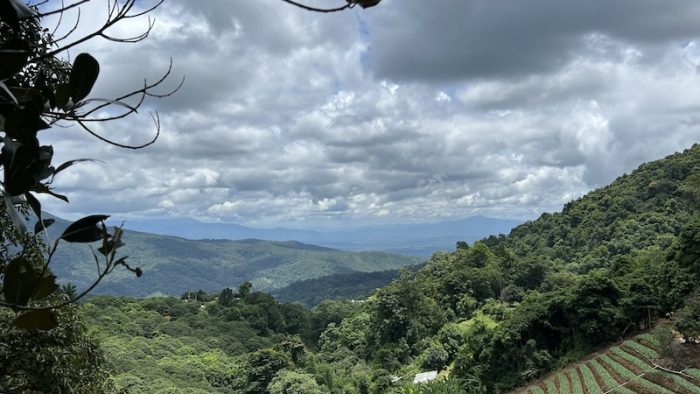
Chiang Mai: Trekking the Opium Trail on Doi Suthep
| Price per person in THB | ||||||
|---|---|---|---|---|---|---|
| 2 persons | 3 persons | 4 persons | 5 persons | 6 persons | 7 persons | 8 persons |
| 4,800 | 3,600 | 2,800 | 2,400 | 2,100 | 1,900 | 1,700 |
Hike the most spectacular, educational and entertaining nature trail – Private Tour
This day tour takes you from the Hmong village of Ban Doi Pui to Ban Mae Sa Noi, another Hmong village. Our purpose is to inform you about the lifestyle, history, and culture of the Hmong people. By visiting these villages, you support the preservation of their culture and support villagers who act as a local guides. By hiking through their forest we try to raise awareness of the importance of the forest which is their watershed. You will also support Doi Suthep-Pui National Park, a protected area. We try to communicate the diversity of the natural world and the healing effect of being in nature. We appreciate the efforts of the Hmong people to preserve this forest. Furthermore, we consider this one of our Chiang Mai jungle trekking and forest bathing tours. Please check out this page for information about the best time for trekking in Chiang Mai.
Total driving time: two and a half hours
Please note that the Doi Suthep-Pui National Park is closed every year from early February until June 1 to protect the park against forest fires. During this period we don’t operate this tour.
Prefer to book by email?
If you don’t feel comfortable using the booking system, or run into any issues with it, you’re welcome to book your trip by email instead.
We’re also happy to answer any questions about our trips or about Chiang Mai and Northern Thailand in general and every trip on this website can be tailored.
Get in touch with us at info@green-trails.com
From: 4,800.00 ฿


Great trekking on Doi Suthep
Wat Doi Suthep, the Temple on the Mountain
This is a private trip. No one else will join you. For the best time to go trekking in Chiang Mai, check out this page.
Our guide and driver will meet you at the hotel at 0800 for your “Trekking the Opium Trail” tour. This is the best one-day Doi Suthep trekking. We will drive to Doi Suthep, the mountain dominating the landscape around Chiang Mai. “Doi” means “mountain” in the Northern Thai language. Doi Suthep and Doi Pui are the two peaks in the Doi Suthep-Pui National Park. We recommend you turn off your phone and enjoy your digital detox today. First, we will visit Wat Phra That Doi Suthep, arguably the most famous temple of Chiang Mai, before the crowds arrive. Walk up the 300 steps up to the temple, from where you have a majestic view over Chiang Mai.


Visit to the Hmong village of Baan Doi Pui
We continue to Doi Pui Village, a Hmong community close to the summit of Doi Pui. Most people here don’t wear their spectacular traditional dress daily, but you will see some of it. Your guide will tell you about the turbulent history of the Hmong communities in this area. In the past, the Hmong villages on Doi Suthep were involved in opium cultivation. In the 1960s the late King Bhumibol Adulyadej (Rama IX) initiated the Royal Project on Doi Suthep. One of the aims was to ban the cultivation of opium on the mountain and introduce various cash crops to the Hmong people.
Nowadays, the Hmong village of Doi Pui is a major tourist attraction on Doi Suthep and a producer of coffee, amongst others. We will walk around the village before we meet our local Hmong guide, who will accompany us on our hike to another Hmong community of Baan Mae Sa Noi, in the Mae Sa Valley. Start your fantastic Doi Suthep trekking!


Trekking with a Hmong Guide
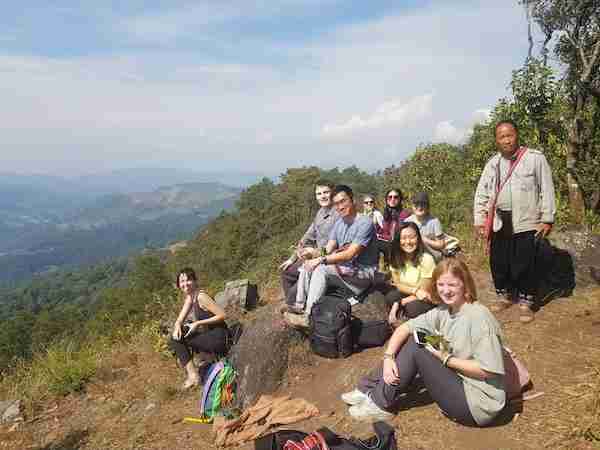
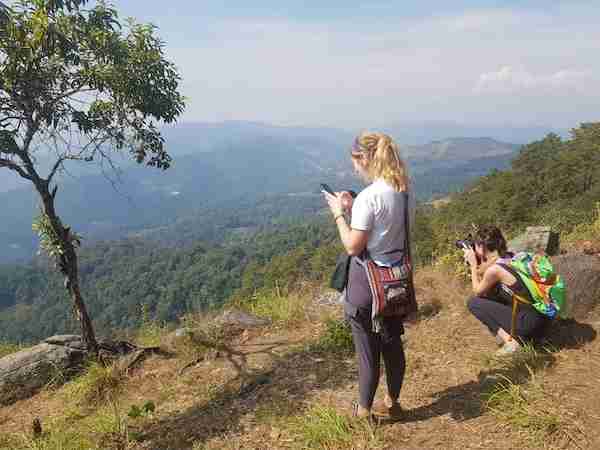
This hike through Doi Suthep-Doi Pui National Park is about 12 km long and will take about 5 hours, including many stops to take pictures and enjoy the forest and great views. The trail goes up and down, but is never steep. Our Hmong guide will share his knowledge of the forest with us and tell past stories. Both Hmong villages were located at a higher elevation until the Thai government forced them to move to their current location.
In the late 1960s, the late King Bhumibol Adulyadej, Rama IV, initiated a development program known as The Royal Project to alleviate poverty in the villages of ethnic minorities. One of the aims was to eradicate the widespread opium cultivation and offer the minorities alternative cash crops. During our trek, we pass former opium fields and also fields of cabbage, bell pepper, and other alternative crops.


Picnic lunch on Doi Pha Klong
After a walk uphill, we will arrive at Doi Pha Klong, an mountain top with fantastic views on both sides. We will stop briefly to look at a footprint of the Buddha before enjoying a picnic lunch at a scenic spot. We will continue through agricultural fields and the forest to the villages Ban Mae Sa Mai and Ban Mae Sa Noi. During the walk, we will try to teach you a couple of words in the Hmong language: “Ngo shong” is the Hmong greeting. These villages form the largest Hmong community in Northern Thailand and get relatively few visitors. We will show you some of the amazing traditional Hmong dresses. If you wish, you can dress in these beautiful garments and be a “Hmong for a minute.”


Forest Restoration on Doi Suthep
You will learn about an exciting project of FORRU, the forest restoration unit of Chiang Mai University. Over the past twenty years, the villages of Baan Mae Sa Noi and Baan Mae Sa Mai have worked with this institute to restore the original forest on denuded, former poppy fields as much as possible. Drive back to Chiang Mai. Your guide will drop you off at the hotel. Here, your Doi Suthep trekking ends.
We also offer a day tour to Baan Mae Sa Noi as well as an educational tour for schools and universities. If you want less trekking and more time in the village of Doi Pui, you might be interested in one of these one-day trips: The Doi Pui Opium and Coffee Tour or the Hmong Experience.
Highlights
Comfortable private transportation
Medium trekking, suitable for people with a normal fitness level
Wat Doi Suthep, Chiang Mai’s most famous temple
Doi Pui Hmong village
Beautiful forest of Doi Pui-Doi Suthep National Park
Hmong tribal culture
Royal agricultural project
Majestic views
Hmong village Ban Mae Sa Mai
Interesting history of opium cultivation and substitution by cash crops
Forest restoration
Inclusions
What is included?
English speaking guide
Transportation by AC minibus
Local Hmong guide
Thai picnic lunch
Drinking water during meals
Entrance fees
Limited medical insurance
What is not included?
Other drinks except for water during meals
Personal expenses
Tips
Timeline
08.00 – Departure from the hotel
09.00 – Visit the Doi Suthep temple
09.30 – Drive to Doi Pui village
09.45 – arrive and visit the village
10.00 – start hiking for 5-6 hours
12.00 – Picnic lunch on the way
12.30 – Continue hiking
15.30 – Arrive at Baan Mae Sa Mai, relax and visit the village
16.00 – drive back to Chiang Mai
17.30 – drop off at the hotel
What to bring
Long sleeves/Jacket during wintertime (Nov – March)
Hiking shoes with good grip
Sunscreen
Hat or cap
Insect repellent
Sunglasses
Raincoat
Small backpack
Related products

Green Trails Expeditions