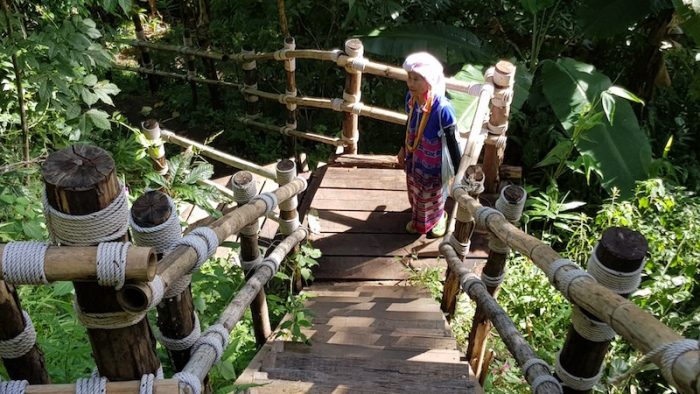
The Hmong Experience
| Price per person in THB | ||||||
|---|---|---|---|---|---|---|
| 2 persons | 3 persons | 4 persons | 5 persons | 6 persons | 7 persons | 8 persons |
| 4,300 | 3,100 | 2,500 | 2,100 | 1,900 | 1,700 | 1,500 |
Learn about the daily life of the Hmong people on Doi Suthep – Private Tour
This day tour is focused on the Hmong people, one of South East Asia’s most interesting hill tribes. We will visit the community center of the village of Ban Mae Sa Noi, learn about handicrafts and textiles. We will make a fairly easy two-hour walk to get to know the area and enjoy the marvelous views from the slopes of the famous Doi Suthep. A local Hmong guide will join us for the day. We will also visit the interesting Royal Project compound as well as the tree nursery of FORRU, the Forest Restoration Unit of Chiang Mai University.
From: 4,300.00 ฿
Meet the Hmong people of Doi Suthep
An immersive Hmong Experience
Your guide and driver will meet you at your hotel at 08:00 for your one-day Hmong Experience Tour. We will drive to the Hmong village of Ban Mae Sa Noi in the upper Mae Sa Valley. Ban Mae Sa Noi and neighbouring Ban Mae Sa Mai were originally one settlement but were administratively divided in 2004. Together, they form one of the largest Hmong communities in Northern Thailand. Both villages lie within the boundaries of Doi Suthep-Pui National Park. On this tour, we will focus on Ban Mae Sa Noi.
In the 1960s, opium cultivation was an important source of income for Hmong communities on Doi Suthep. The Royal Project played a major role in helping villagers move towards alternative crops. With support from project staff and increasing pressure from the authorities to stop growing opium, families gradually developed new livelihoods. This transition transformed agriculture and daily life in the community, a fascinating story that we will explore during our visit.
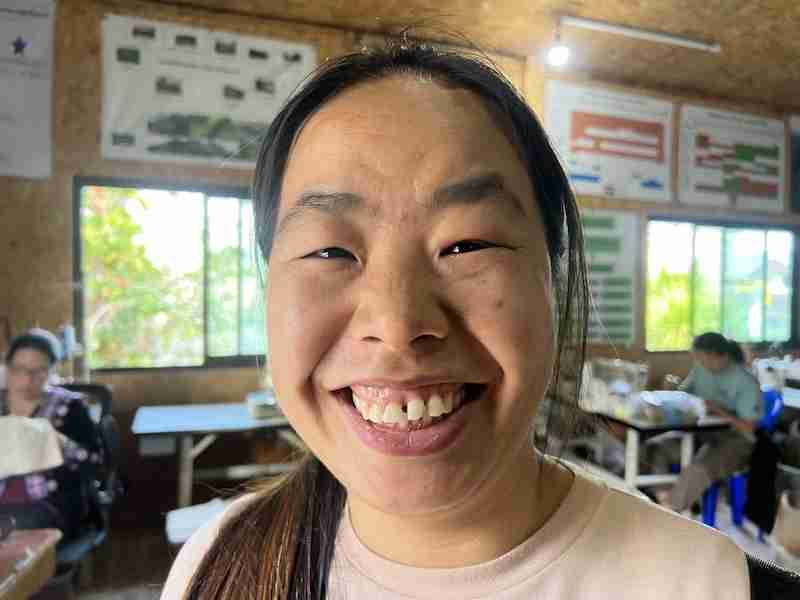
Our first stop is the village’s small community centre, where our local Hmong guide will join us. This is an opportunity to ask questions about village life, with your tour guide translating when needed. You will also learn a few simple words in the Hmong language.
Walk through Ban Mae Sa Noi
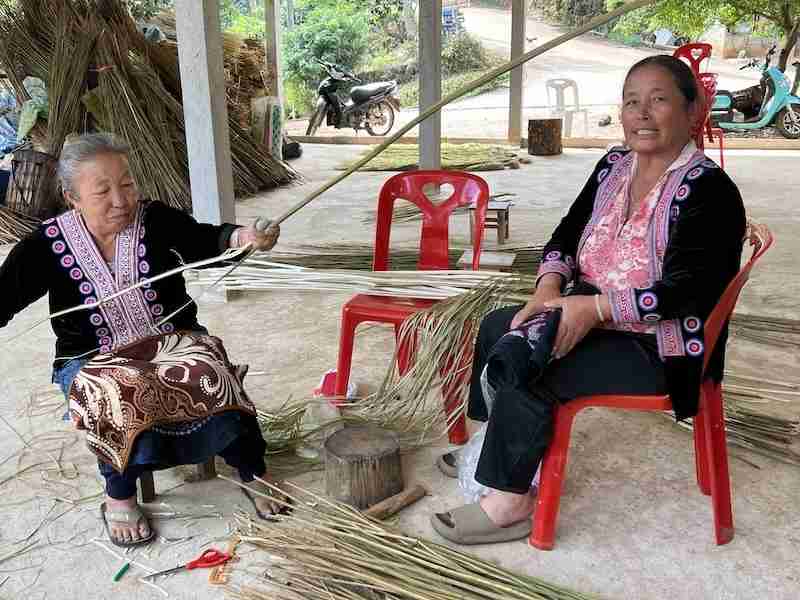
Our Hmong guide will take us to the village textile centre, where local women produce fabrics, sell their handicrafts and organize workshops. The centre also makes textiles for the Royal Project, whose shops across Thailand sell the community’s products. This work provides an important source of income for local women. Here, you can learn about the skill and patience involved in making traditional hemp cloth, from preparing the plant fibres to spinning yarn and weaving fabric.
We will then take a short walk through the village, visiting family homes where people practice traditional handicrafts. There will be time to chat with residents and learn more about their work and daily routines.
We will also stop at a board displaying a fascinating village family tree, which offers an insight into the community’s origins and family connections. Hmong families trace their roots to China, with migration routes through Vietnam, Laos and different parts of Northern Thailand.
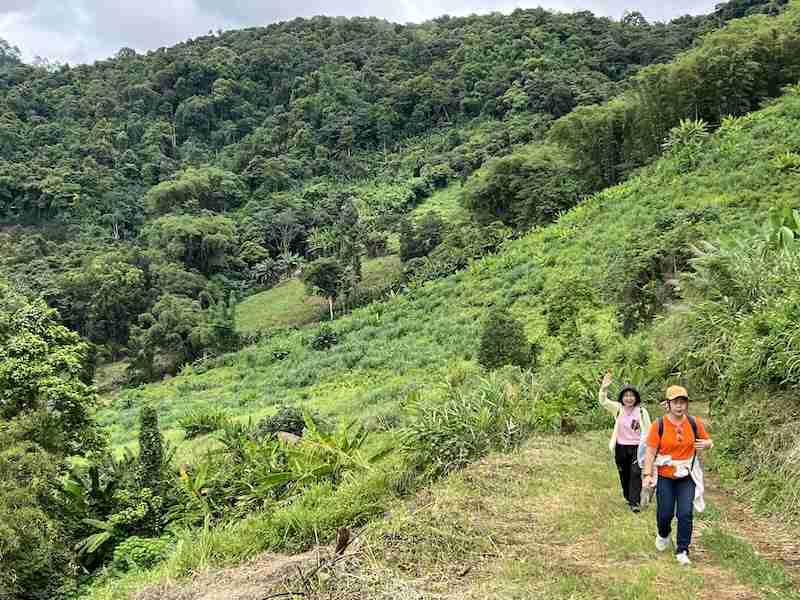
Hiking on the slopes of Doi Suthep-Pui
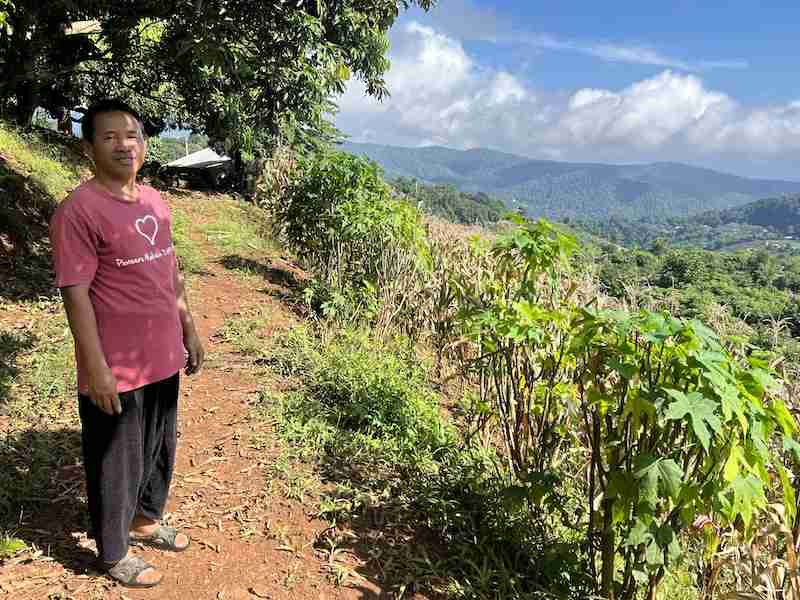
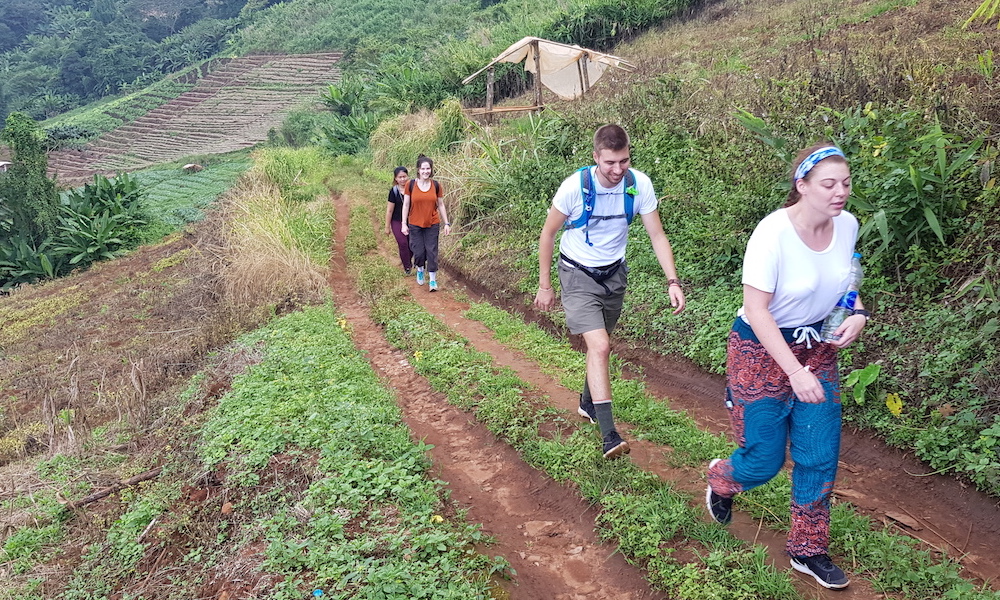
After enjoying a local snack, we will set off on a scenic hike through the watershed forest and surrounding farmland. Along the way, our Hmong guide will share local legends and explain how plants are used in traditional medicine.
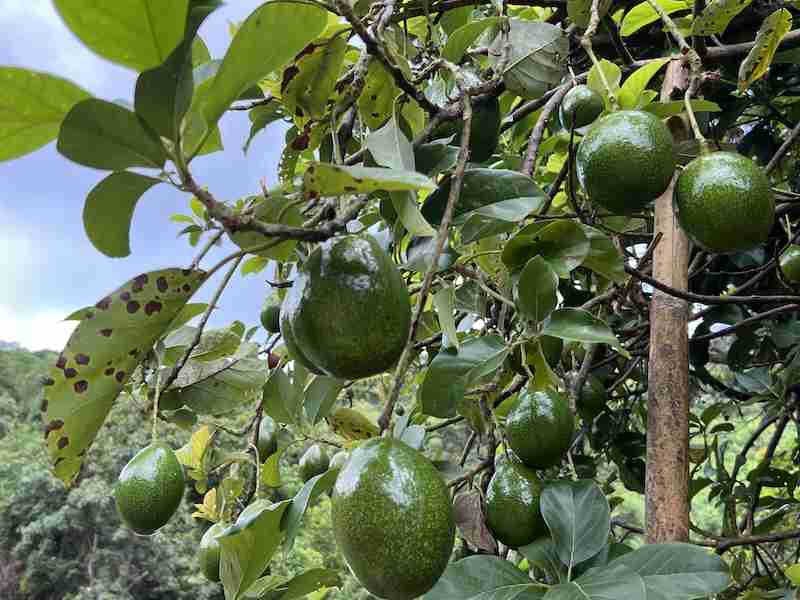
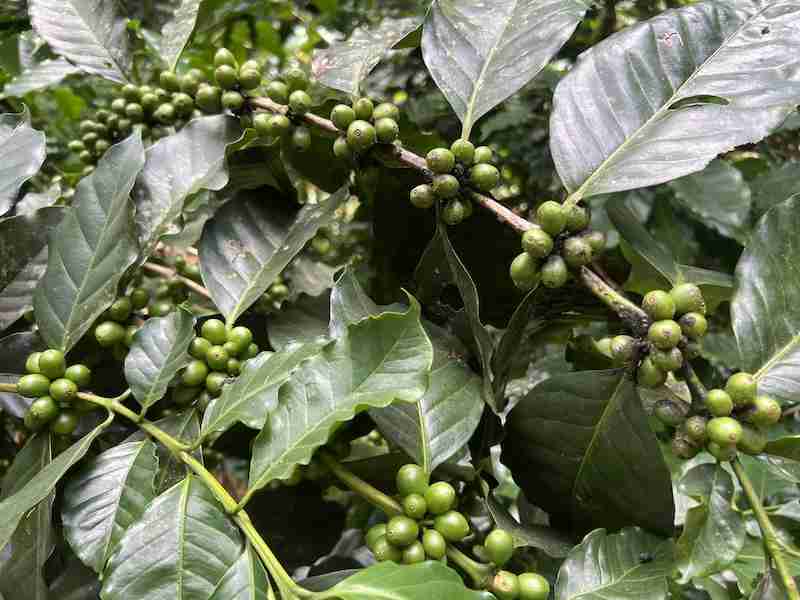
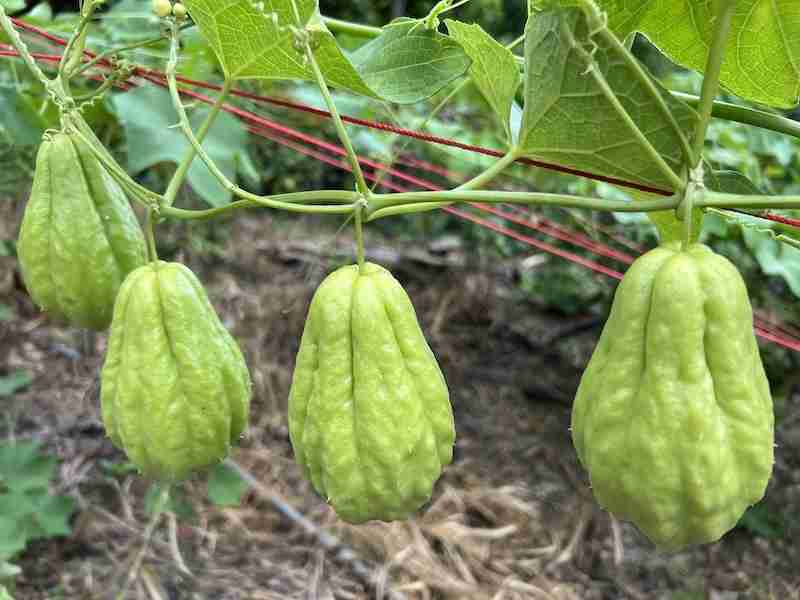
The trail passes fruit orchards and terraced fields, where villagers grow a wide variety of crops, including tea, coffee, tomatoes, pumpkins, aubergines, cucumbers, strawberries, garlic, chillies, lettuce and chayote. You may also see avocado, lychee, longan, banana, papaya, jackfruit and mango trees. What we encounter will depend on the season.
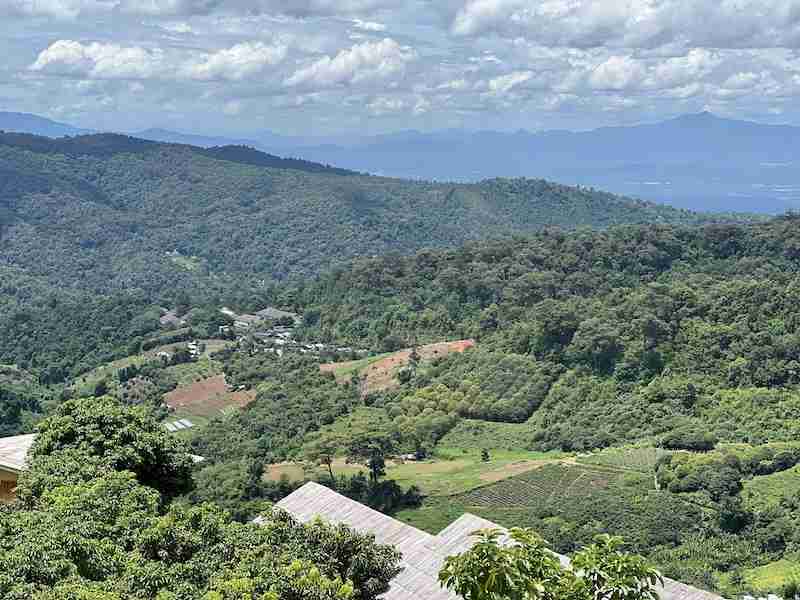
The walk offers lovely views of the village and the lowlands beyond, with plenty of time to take photographs and enjoy the surroundings. We will have a simple picnic lunch in the forest or lunch in a village home.
The community has also worked with FORRU, the Forest Restoration Research Unit of Chiang Mai University, to restore parts of the watershed forest. This collaboration adds another chapter to the story of a landscape where opium was once cultivated.

Learn about Forest Restoration
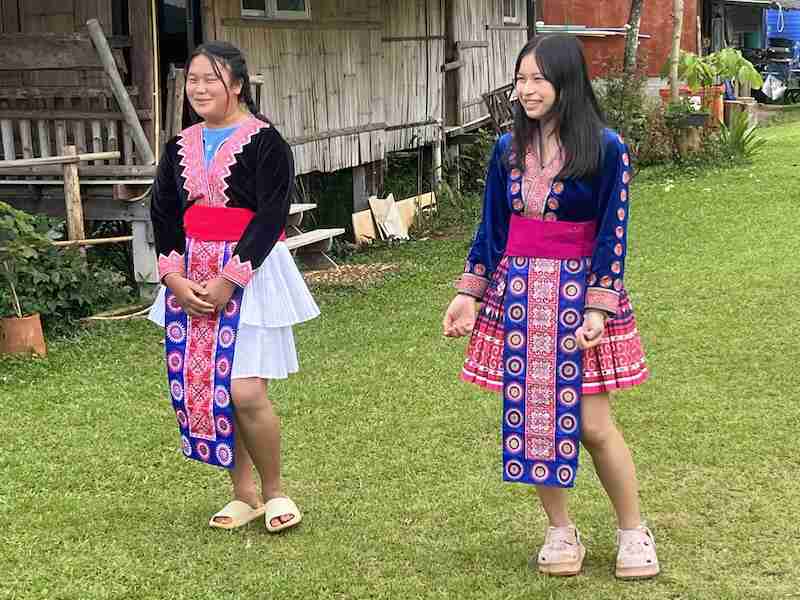
After the hike, we will visit the FORRU tree nursery to learn how native trees are grown and used to restore the forest. You will also have the opportunity to try potting seedlings, a practical and enjoyable introduction to forest restoration. Back in the village, a local woman will introduce you to traditional Hmong dress, explaining some of its distinctive features. There will be an opportunity to take photographs before we say goodbye to our hosts. We will then drive back to Chiang Mai and drop you off at your hotel, bringing your Hmong Experience Tour to a close.
For a more challenging day of hiking, consider our fantastic Opium Trail trek, which explores more of the forest trails of Doi Suthep. If you would to learn more about the beautiful textiles of the Hmong people you might want to join our textile trip to Ban Mae Sa Noi.
Highlights
Hmong village Baan Mae Sa Mai
Easy trekking
The Royal Project
Learning about Hmong textiles
Learning about the Hmong language and culture
Lunch with local ingredients
Forest Restoration Project
Mon Chaem viewpoint
Inclusions
What is included?
English speaking trekking guide
Local Hmong guide
Transportation by minivan
Lunch
Drinking water during meals
Limited medical insurance
What is not included?
All drinks, other than drinking water during lunch
Personal expenses
Tips
What to bring
T-shirt and shorts for daytime
Hiking shoes with good grip
Swimsuit
Flip flops
Sunscreen
Hat or cap
Insect repellent
Sunglasses
Small backpack
Timeline
08.00 – Departure from the hotel
09.00 – Arrival in Baan Mae Sa Noi
09.30 – Village walk
10.30 – Agricultural walk
12.00 – Lunch
13.00 – Time for questions
14.30 – Drive to FORRU nursery followed by potting seedlings
15.30 – Drive back to Chiang Mai
16.30 – Drop off at the hotel
Related products
Green Trails Expeditions


Educational Tours